2015
GBAAM founded — first cohort
Established by Dr Souphi Samizadeh as a postgraduate pathway for doctors and dentists. First cohort: six candidates, taught in a borrowed clinical room in west London.
About the Academy
The Great British Academy of Aesthetic Medicine was founded in London in 2015 to formalise the postgraduate training pathway that aesthetic medicine had never had: small cohorts, named faculty, evidence-led teaching, ultrasound-guided practice, and an explicit refusal of the marketing-led model that had come to dominate the sector. A decade in, the model is the same.
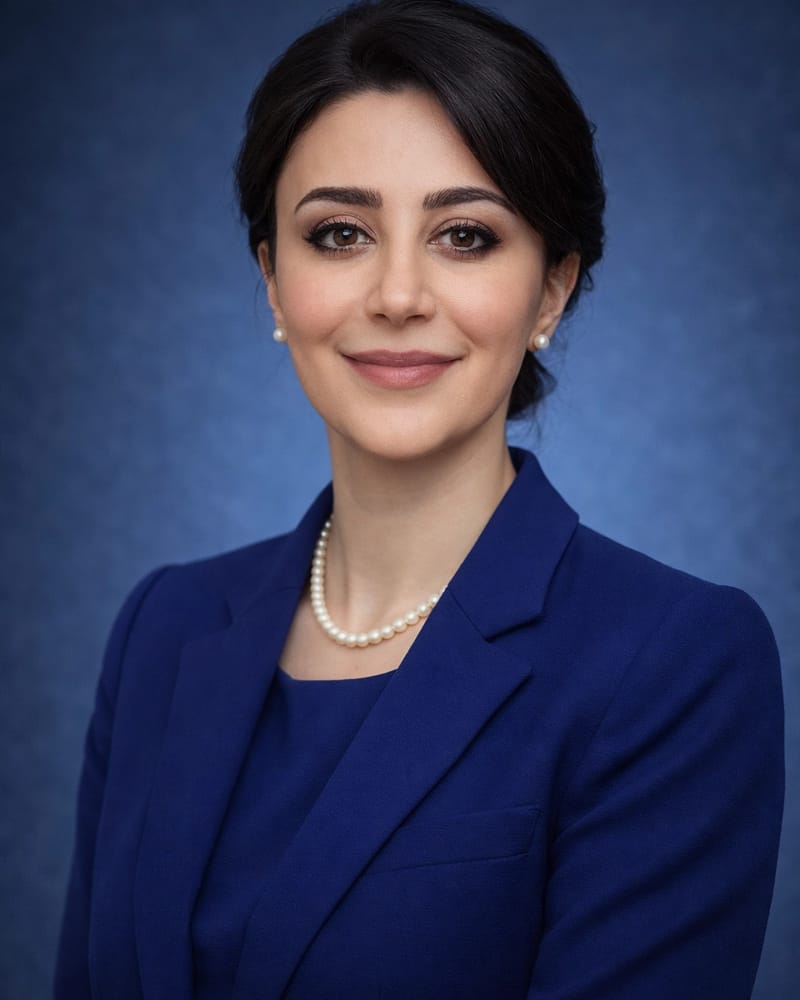
01 The founder
I qualified into a clinical environment that had no real postgraduate pathway for aesthetic medicine. There were weekend courses and there were sales-led training days; there was no academy, in the sense in which any other medical discipline would understand the word. I started GBAAM in 2015 because I could not find what I wanted to learn, and so eventually had to build it.
The Academy's first cohort was six candidates in a borrowed room in west London. We have grown — six thousand alumni, a faculty across seven countries, an annual symposium at the Royal Society of Medicine — but we have not changed the small things that matter: small cohorts, named faculty, evidence-led teaching, and an explicit refusal of any practice that prioritises commercial relationships over clinical judgment.
"Aesthetic medicine deserves the same intellectual rigour as any other clinical discipline. The Academy is built on that conviction."
What you see across these pages is the academy, not me. The faculty teach in their own clinical scope. The curriculum is shaped by what alumni come back and ask for. The workshops are taught at our Hampstead training centre — the same room I trained my first cohort in, slightly rebuilt.
02 A short history
From a single training day in west London, to a faculty across seven countries and an annual symposium at the Royal Society of Medicine. The milestones the academy has set itself, in order.
2015
Established by Dr Souphi Samizadeh as a postgraduate pathway for doctors and dentists. First cohort: six candidates, taught in a borrowed clinical room in west London.
2016
Inaugural overseas teaching engagement. Three days, eight UK and Asian faculty. The beginning of what would become the international roster.
2017
First scientific symposium held at the RSM in London. Focused on the evidence base for botulinum toxin A in aesthetic indications. The event has run annually since.
2018
Permanent training centre opens in Hampstead. Two practice rooms, lecture room, conservatory. Replaces the pattern of borrowed clinical space.
2019
Alumni count crosses six thousand clinicians from more than 250 hospitals across Asia, Europe, the GCC, and the United Kingdom.
2020
Faculty decision: every injectable workshop in the catalogue moves to live ultrasound at every bench. The single biggest curriculum change since founding.
2024
Roster grows with Dr Larkina, Dr Konovalova, Mr Humza, and others. Specialty mix expands to include neurology and maxillofacial surgery alongside plastics and dermatology.
2026
Five CPD-accredited foundational courses launched as a standalone online subscription, complementing the in-person workshop series. The current shape of the academy.
03 Mission
Everything the Academy does sits under one of these three. If a piece of work does not, we do not take it on.
i.
We train practitioners in patient-centred, evidence-led, ethically defensible practice. The marketing-led model that has shaped much of the sector is the explicit thing we exist to be an alternative to.
ii.
Solid scientific foundation paired with hands-on practice. Small cohorts. Faculty over the shoulder. Ultrasound-guided as standard. Curriculum reviewed annually against the peer-reviewed literature.
iii.
The relationship with the academy doesn't end at the certificate. Alumni have access to faculty for case-related questions, a 24/7 complications hotline, and priority registration for the symposium.
04 How we work
Each is a deliberate choice that has commercial cost, and which we have not changed since founding.
Principle 01
Every workshop is capped at eight candidates with two faculty — a 1:4 ratio. Smaller, when the workshop is at expert level. We could fill larger rooms; we won't. The ratio is the teaching; once it's lost, the workshop is lost with it.
Principle 02
Live high-resolution ultrasound on every injection bench, in every workshop in the injectable curriculum. The reason is clinical, not aspirational: ultrasound visualisation reduces vascular complications and produces practitioners who can read what they're treating.
Principle 03
We do not invite emeritus speakers. The frontier of any technique is in the hands of the people doing it weekly. If a faculty member stops practising, they rotate to alumni status — gracefully, with thanks. Teaching without practising is not teaching.
Principle 04
Every online lesson and every workshop module names its primary sources. We do not permit received wisdom content. If a citation is contested, we say so. If new evidence overturns a teaching, we update the lesson and tell alumni.
05 The training centre
The Academy's training centre opened in 2018 in Hampstead, north London. The building is a converted Victorian property: two ground-floor practice rooms, one lecture and demonstration room, a conservatory used for lunch and informal Q&A, and a quieter upstairs floor used for the registrar and faculty.
The centre is intentionally not large. We have turned down opportunities to scale into a larger venue, because the room is part of the teaching: cohorts of eight, two practice benches, and the same room each member of faculty knows their way around without a floorplan.
Annual scientific symposium
The Academy's annual scientific symposium is held at the Royal Society of Medicine in London. It is the single event each year at which the full international faculty teach in one room.
The symposium is open to non-alumni clinicians by application. Registration opens to alumni in October; to non-alumni in November.
View the symposium archive →Symposia held at the RSM since 2017 — every year, including remote-format 2020.
Speakers across all symposium years, drawn from current faculty, alumni, and invited guests.
Peer-reviewed papers produced from the 2024 symposium proceedings.
06 Industry partners
Partnerships are clinical and educational, not commercial. We hold no exclusivity agreements; faculty teach using the products we believe are correct for the indication.
Allergan
AestheticsGalderma
PharmaceuticalsMerz
AestheticsAQ Skin
Solutions07 What we believe
If you disagree with any of them, you may still be welcome at the academy — but you will hear faculty say them.
Aesthetic medicine is medicine. The standards of consent, documentation, and complication management are the same as in any other clinical discipline.
The smallest correct intervention is almost always the harder choice — and almost always the one the patient remembers.
Ultrasound visualisation should be the floor of injectable practice, not its ceiling.
The doctor's relationship is with the patient, not with the brand they're injecting. Product is a tool; clinical judgment is the work.
Body-dysmorphic patterns are common in elective aesthetic consultation. Screening for them is part of the consultation, not optional.
Faculty teach what they currently practise. Teaching from a technique you no longer use is a form of received wisdom, not teaching.
Cohort size matters more than venue. Eight in a small room learn more than eighty in a large one — every time.
Aesthetic outcomes are not the same as patient outcomes. The first is a photograph; the second is a relationship.
08 Apply, browse, or read on
The shortest route to enrolment is the application form, which is read by faculty and replied to within five working days. If you would rather start by reading what we have published, the journal is the place.